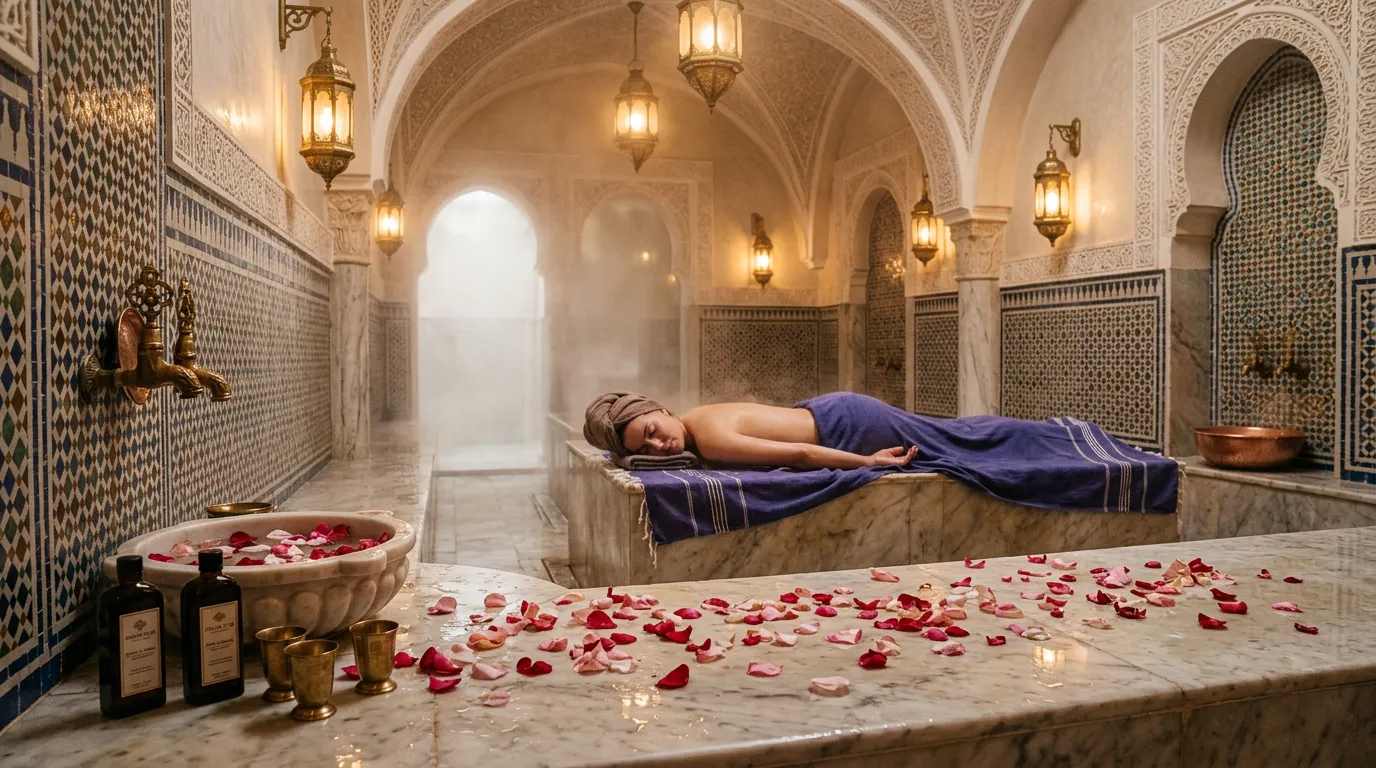
A hammam is a traditional Moroccan steam bath where you wash in a hot, humid room, then are scrubbed from head to toe with black olive-soap and a coarse glove to lift away dead skin. In Essaouira you can do it two ways: a private hammam in a riad or spa, where an attendant does the work and finishes with an argan-oil massage, or a public neighbourhood hammam, where it costs a few dirhams and you bring your own kit. After windy days on the Atlantic coast, it is the single most restorative thing you can book here.
What actually happens in a hammam
You undress to swimwear or disposable briefs and move into a warm, steamy room. First you sit and let the heat open your pores while you sluice yourself with buckets of warm water. Then comes the savon beldi — a soft, dark olive-oil soap — which is smeared over your skin and left for a few minutes. The heart of the ritual is the gommage: an attendant (or you, in a public hammam) works every limb with a rough kessa glove, and a startling amount of grey dead skin rolls off. A final rinse, often a rhassoul-clay hair mask, and you emerge looser, lighter and remarkably clean.
In a private hammam the whole thing takes 45 minutes to an hour, often followed by an optional argan-oil massage. In a public hammam there is no fixed script — you go at your own pace, and the social warmth of the room is half the point.
Public vs private: which should you choose?
A private (tourist) hammam in a riad or spa is the easy, comfortable first-timer choice: you book a slot, everything is provided, an English- or French-speaking attendant does the scrub, and you can add a massage. Expect a calm, candle-lit room and a price to match. A public neighbourhood hammam is the authentic, communal version Moroccans use weekly — cheap, busy, unpolished and genuinely local. You bring your own soap, glove and towel, men and women go at separate times, and a small tip secures a local scrubber if you want one.
Our honest steer: if it is your first hammam, or you want pampering, book a private one. If you have done it before, speak a little French or Arabic, and want the real thing, the public hammam is cheaper and far more memorable. You can also do both — the local hammam for the experience, a riad one for the massage.
What it costs in Essaouira
A public hammam costs roughly 15–30 dirhams to enter, with a few dirhams more for a tellak to scrub you, plus a handful of dirhams in the souk for your soap, glove and towel. A private riad or spa hammam with a full scrub, clay or argan mask and a short massage typically runs 250–600 dirhams per person, depending on the riad and the length of treatment. Longer signature rituals with extended argan-oil massage cost more. Prices move, so confirm when you reserve — and read our Essaouira tipping guide for what to leave the attendant.
What to bring and what to wear
For a public hammam, bring flip-flops, a towel, a change of dry underwear, a bottle of savon beldi, a kessa glove and — if you like — a small plastic stool. All of it is sold cheaply in the medina souks; ask your riad for the nearest stall. Wear swimwear bottoms or old underwear: Moroccans do not bathe fully nude, and modesty is the norm. A private hammam supplies everything, including disposable briefs, so you simply arrive showered and ready.
Hydrate before and after, go easy if you have low blood pressure or a heart condition, and don't book a hammam straight after a heavy meal. Pregnant travellers should ask their riad for a gentler, cooler treatment rather than the full hot room.
Etiquette and the separate-sex rule
Public hammams run on separate hours or separate entrances for men and women — commonly women through the day and men in the evening, though it varies, so check the timetable with your riad. Keep your swimwear on, keep your voice low, accept help graciously if a neighbour offers to scrub your back (a kind, normal gesture), and tip the scrubber a few dirhams. A polite "la, shukran" — no, thank you — declines anything you don't want. The room is relaxed and friendly; treat it as you would any shared bath house.
The argan-oil connection
Essaouira sits in the middle of Morocco's argan country, so the oil that finishes many local hammams is genuinely regional — the same kind the women's argan cooperatives outside town press by hand. Many rituals here add a rhassoul clay mask from the Atlas for hair and skin, and cosmetic argan oil for the closing massage. If you fall for the products, buy the cosmetic oil from a cooperative rather than a souk stall — see our Essaouira shopping guide for how to tell the real thing from the diluted stuff.
When to fit a hammam into your trip
The classic moment is late afternoon, after the wind has scoured you on the beach or the ramparts, and before dinner — you walk out clean, loose and ready to eat. It also makes a perfect rainy or very windy afternoon, when the alizé trade wind keeps you out of the open. On a two- or three-day stay, build it into your second afternoon; we slot it into couples and slow-travel itineraries as the unwind before a seafood dinner at the port.
Frequently asked
What is a Moroccan hammam?
A hammam is a traditional steam bath — a humid, heated room where you wash, then are scrubbed with black olive-soap (savon beldi) and a coarse kessa glove to lift away dead skin. It is part hygiene ritual and part social institution, used weekly by Moroccans of all ages. In Essaouira you can choose a public neighbourhood hammam (a few dirhams, bring your own kit, locals only) or a private tourist hammam in a riad or spa, where a trained attendant does the scrub and adds an argan-oil or rhassoul-clay treatment.
Should I do a hammam in Essaouira, and is it worth it?
Yes — a hammam is one of the most worthwhile things you can do here, especially after windy beach days or a long medina walk. The Atlantic wind leaves salt and sand on your skin, and the deep scrub leaves you genuinely cleaner and looser than any shower. For a first-timer, a private hammam in a riad is the easy, comfortable choice; if you want the real, unfiltered local version, a public hammam is cheaper and unforgettable, but plan to be hands-on.
How much does a hammam cost in Essaouira?
A public neighbourhood hammam costs roughly 15–30 dirhams for entry, plus a few dirhams if you want a local tellak (scrubber) to do the work — bring your own savon beldi, glove and towel, which cost a few dirhams in the souk. A private tourist hammam with a full scrub, mask and short massage typically runs 250–600 dirhams per person depending on the riad and the length; argan-oil massages add more. Prices shift, so confirm when you book.
What should I bring and wear to a hammam?
For a public hammam, bring flip-flops, a towel, a change of underwear, savon beldi (black soap), a kessa scrubbing glove and a plastic stool or bucket if provided isn't guaranteed — locals can point you to the souk stalls that sell the kit cheaply. Wear swimwear bottoms or old underwear; full nudity is not the norm and men and women bathe at separate times or in separate hammams. Private tourist hammams provide everything; you simply turn up and wear the disposable briefs they give you.
Are men and women separated in a Moroccan hammam?
Yes, in public hammams. They either have separate entrances or, more often, alternate hours — typically women through the day and men in the evening. Ask your riad for the current timetable, as it varies by hammam. Private tourist hammams are usually booked per person or per couple and can be mixed if you reserve the space privately.
What is the difference between a hammam and a spa massage?
A hammam is a wash-and-scrub steam ritual centred on exfoliation with black soap and the kessa glove; a massage is optional and added afterwards. A spa massage on its own skips the steam and scrub. In Essaouira most riads offer the hammam as the core experience, then upsell an argan-oil massage as a relaxing finish — the two together make the classic two-hour wellness afternoon.
Is argan oil used in Essaouira hammams?
Often, yes. Essaouira sits in the heart of Morocco's argan country, so local hammams and spas frequently finish the ritual with cosmetic argan oil or amlou-style scrubs, and many use rhassoul, a mineral clay from the Atlas, as a hair and skin mask. It is a genuinely regional touch rather than a gimmick — the same oil the women's cooperatives outside town press by hand.
Ready to unwind?
We'll book the right hammam for your trip.
Tell us whether you want a polished riad ritual with an argan-oil massage or pointing toward the best local hammam, and we'll arrange it around your days in town — the ramparts, the port grills and the beach.
Plan an Essaouira itinerary