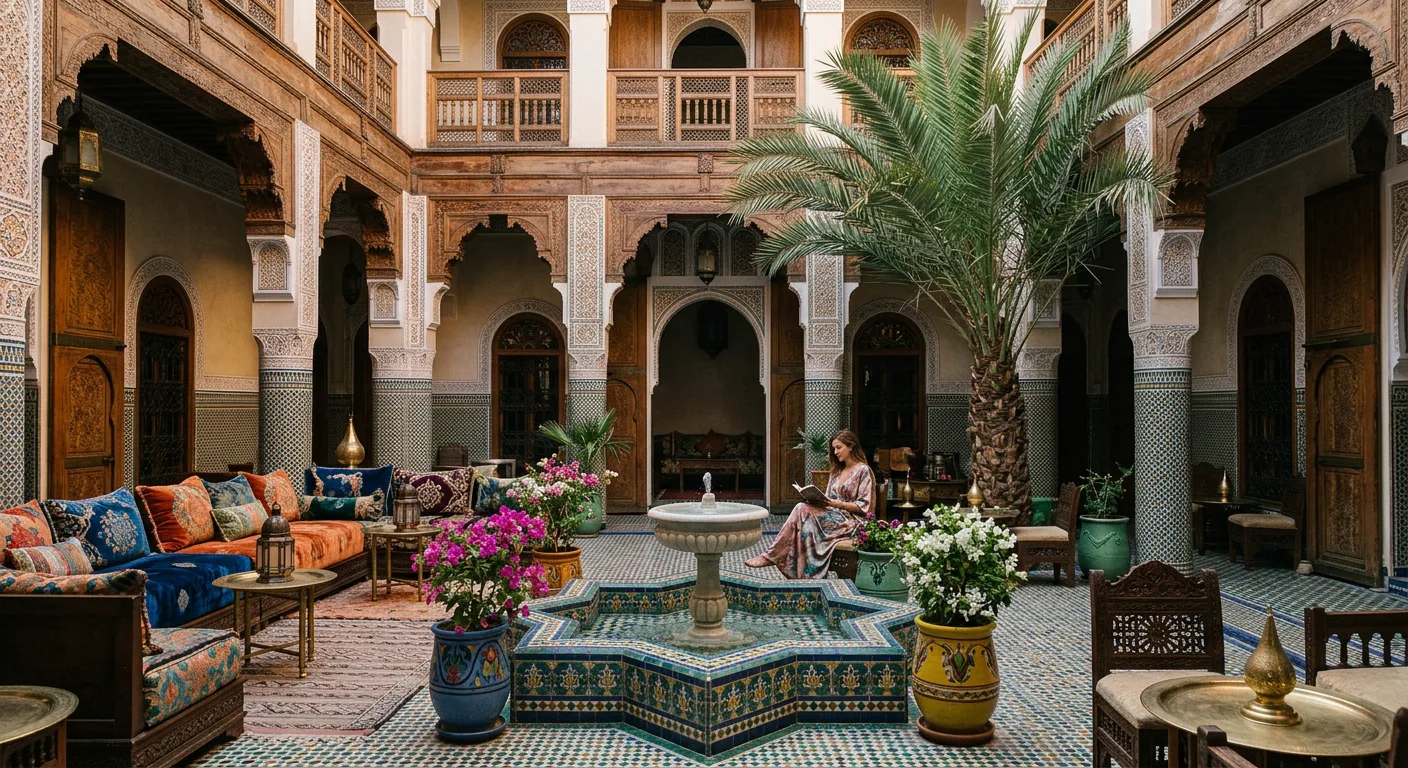
Essaouira is a small walled town between the medina and the sea, and where you sleep shapes how you experience it. The right choice puts the ramparts, port and souks within an easy walk, with a courtyard to retreat from the wind; the wrong one leaves you fighting the breeze or far from the action. Essaouira's charm is in its riads — restored courtyard houses turned inward away from the Atlantic. Knowing the options saves both money and disappointment.
What gives an Essaouira stay its character?
The most memorable places to stay are riads — conversions of old merchants' houses built around a central courtyard, turned inward away from the wind, with flat roofs the best riads make into terraces overlooking the white-and-blue town. Light through the courtyard, the calm within the walls, and a rooftop view of the ramparts are the recurring pleasures.
The medina is a compact eighteenth-century grid, and the riads tucked into its lanes retain the texture of the old town — thuya-wood doors, tadelakt plaster, blue shutters. The details to look for in a good conversion — a sheltered courtyard, a rooftop terrace, solid shutters against the breeze — represent a quieter, more sheltered Essaouira than the exposed beachfront.
Plenty of newer hotels adopt the riad label without the historic fabric, and the beachfront has larger modern hotels near the surf. They can be excellent and convenient, but they're a different experience. If staying somewhere with genuine character matters to you, ask directly about the building and look for a courtyard, a terrace and a personal welcome rather than a generic lobby.
Which area suits which traveller?
The rewarding stays cluster between the medina and the beach. Each has a distinct feel:
- Inside the medina walls: the most characterful base, walkable to the ramparts, port and souks, with the best concentration of courtyard riads and rooftop terraces. Sheltered from the wind. Best for first-timers who want everything on foot.
- The beachfront / Borj el Baroud road: larger hotels and apartments near the surf schools, with sea views and direct beach access — but more exposed to the wind and a short walk from the medina. Good for windsurfers and families wanting a pool.
- Just outside the walls (Mellah / Bab Marrakech): quieter and better value, a few minutes' walk from the souks, where cars can reach the door. Suitable for those who prefer calm and easy luggage access.
- Out toward Diabat & the country: rural retreats and small hotels in the argan and dunes south of town — peaceful and scenic, but you'll need transport for the medina. Worth it for travellers prioritising quiet and nature.
What should you look for in a riad?
Beyond location, these are the questions worth asking before booking:
- Is it owner-managed or chain-run? Owner-present riads tend to have warmer service, better local recommendations and stronger attention to maintenance.
- How many rooms does it have? Under twelve rooms is intimate; the small medina riads often have only five to eight around the courtyard.
- Is there a rooftop terrace? An Essaouira rooftop with a view of the white town and the ramparts at sunset is one of the town's quiet joys — worth seeking out.
- Does the room face the courtyard or the street? Courtyard rooms are calmer and sheltered from the wind; street rooms can be noisy and breezy. Ask, especially if you're a light sleeper.
- Does breakfast look genuinely Moroccan? A photo of the spread tells you a lot. Look for fresh bread, msemen, amlou, argan oil, honey and olives — not just croissants and packaged jam.
- How does luggage reach the riad? Cars can't enter the medina, so a good riad arranges a porter with a cart at the gate. Confirm this in advance.
Where to book and how to avoid disappointment
Booking directly with the riad — by email or WhatsApp — often gets you a better rate than third-party platforms and gives you a direct line to the team before you arrive. It also lets you ask the questions above and judge the quality of response.
When reading reviews, weight those from travellers with similar priorities to yours. A solo windsurfer and a couple celebrating an anniversary will rate the same property very differently. Look specifically for comments about wind and noise, breakfast quality, staff helpfulness and how the riad handled any problems — these reveal far more than praise about the décor.
If you'd prefer not to research independently, we work with a curated selection of Essaouira riads and hotels across price points that we've personally visited and vetted. We can match you to the right property based on your dates, group size and what matters to you — then arrange all transfers as part of a wider Morocco itinerary. See our Essaouira destination guide and private tour options for more.
Frequently asked
Should you stay inside the Essaouira medina or by the beach?
Inside the medina walls is the classic choice — a riad with a sheltered courtyard, a rooftop for sundowners and the ramparts, port and souks all on foot, out of the worst of the wind. The beachfront suits those who want a larger hotel near the surf schools and a sea view. Just outside the walls is quieter and better value. Match it to whether you want town life or the water.
What kinds of places can you stay in Essaouira?
Essaouira spans simple guesthouses and hostels in the medina, characterful riads in restored merchants' houses around courtyards, mid-range and design-led boutique hotels, beachfront resorts near the surf, and a few rural retreats out toward Diabat and Sidi Kaouki. The signature stay is the riad — a courtyard house turned inward away from the wind, with a rooftop terrace over the white town.
How do I find a good riad in Essaouira?
Look for owner-run or small independent riads with reviews that mention staff by name and a personal tone in replies. Check that photos show the actual rooms and the rooftop, not just stock interiors. Ask whether rooms face the (sometimes noisy, windy) street or the calm interior courtyard, whether there's heating for breezy winter nights, and how luggage gets from the gate (cars can't enter the medina).
What should a good Essaouira breakfast include?
A proper Moroccan breakfast is a highlight. Look for fresh bread and msemen (flaky griddle bread), amlou (the almond-argan-honey spread), argan oil, local honey and jams, olives, eggs, fruit and mint tea or coffee — ideally served on the rooftop. If a riad offers only packaged bread and jam, it's cutting corners; a generous spread with amlou is the standard at any place worth staying.
Is it safe and practical to stay inside the medina?
Yes. The Essaouira medina is busy but relaxed and safe, flatter and far less frantic than Marrakech, with everything on foot. The main considerations are wind and the no-cars rule: choose a courtyard-facing room if you're a light sleeper, and arrange the porter handover for your luggage at the gate. A riad with a sheltered courtyard is a calm refuge from the afternoon breeze.
How far in advance should I book a riad in Essaouira?
For peak season (spring and early autumn) and especially around the Gnaoua Festival in June, book the best riad rooms two to three months ahead — the town sells out completely for the festival. In winter and high summer, a couple of weeks is usually enough. If you want a specific small riad or a particular rooftop room, the earlier the better, as these houses have only a handful of rooms each.
Accommodation we trust
We'll place you in a riad that fits, not just one with availability.
Every property we recommend has been visited by our team. We know which riads are genuinely sheltered, which kitchens are excellent, which hosts go beyond the expected. Tell us your preferences and we'll match you accordingly.
Request an itinerary