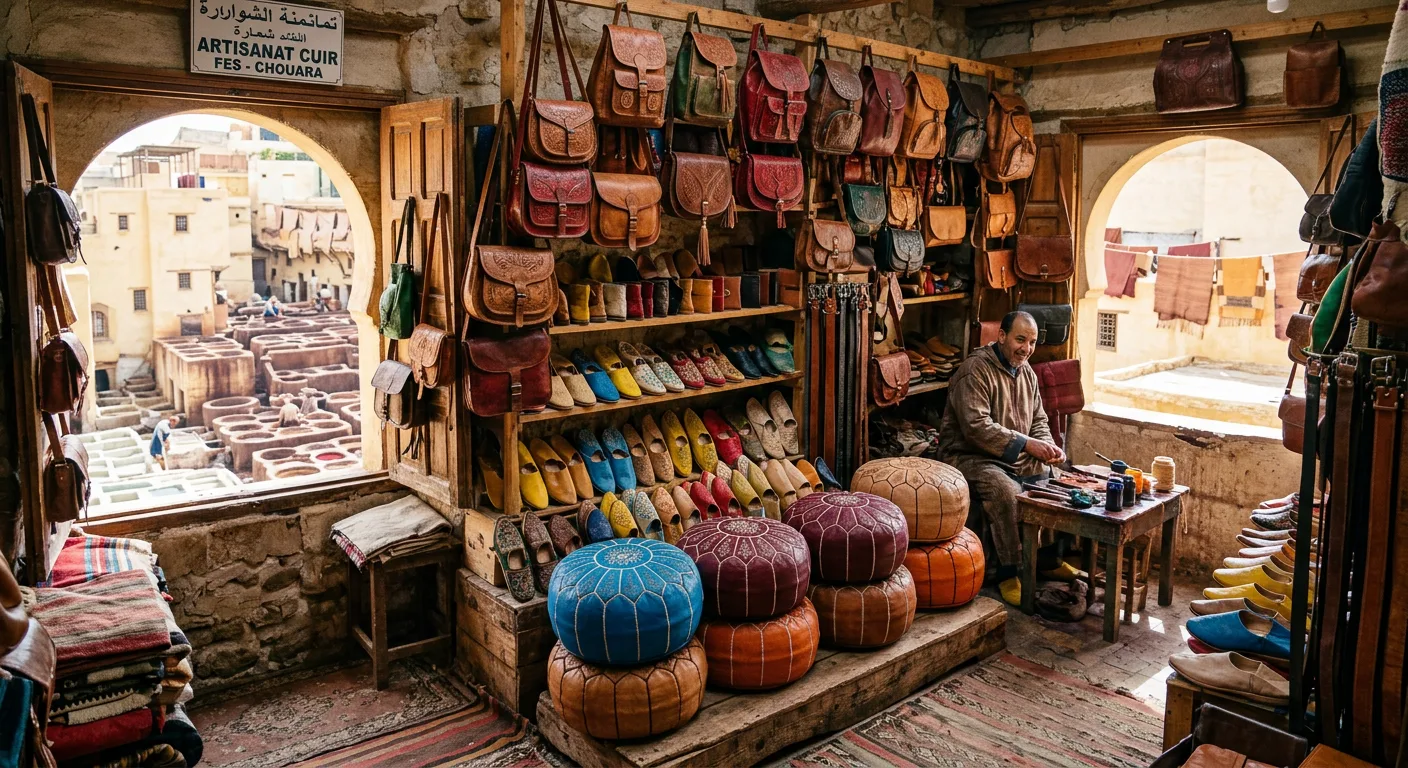
Essaouira is not a hard-bargaining bazaar, and that is part of its charm. The best shopping here is in the workshops and cooperatives — a thuya cabinetmaker under the ramparts, an argan women's collective on the Marrakech road, a spice and raffia seller off Place Moulay Hassan — where you can watch the work being made and buy direct from the maker. Knowing where to look turns souvenir-hunting into a window onto how the town actually lives and creates.
What are the best things to buy in Essaouira?
The quality purchases are tied to genuine local craft traditions. Thuya woodwork — boxes, bowls and inlaid chess sets turned from the fragrant, burled root of the local conifer — is Essaouira's signature, and a fine inlaid box runs US$30–150 depending on size and workmanship. Argan oil — culinary or cosmetic — and amlou, the almond, argan-oil and honey spread, are inexpensive, genuinely local buys from reputable cooperatives. Raffia bags and slippers, silver and beadwork, paintings from the town's art scene, and spices round out the list.
Items to approach with caution: cheap, watery "pure argan oil" of unknown provenance; thuya boxes with plastic 'inlay' or lids that won't close; and mass-produced trinkets dressed up as handmade. The surest way to buy well is to purchase from a cooperative or watch something being carved or pressed before you pay.
Where should you shop for each craft?
The thuya workshops cluster in the arches beneath the Skala de la Ville ramparts — the place to watch the carving and buy direct. Argan oil and amlou are best from the women's cooperatives on the Marrakech road or their medina shops, where you can see the oil pressed by hand. The main souks around Place Moulay Hassan have spices, raffia, jewellery and slippers. For something special, the town's galleries, tucked down the quiet lanes, carry on Essaouira's long tradition as a painters' and musicians' colony.
How does bargaining actually work in Essaouira?
Essaouira's bargaining is gentle. In the thuya shops and souvenir stalls the first price has a little give; cooperatives and many craft shops are essentially fixed-price. A few principles we tell every guest:
- Where bargaining applies, counter at around 60–70% of the opening price and settle modestly higher.
- Don't reveal your budget; let the seller make the first moves.
- Smile and stay warm. Shopping here is sociable, not adversarial.
- Walking away calmly may bring a small final discount, but the gap is rarely large here.
- Once a price is agreed, honour it. Changing your mind after acceptance is considered rude.
- Cooperatives sell at fair fixed prices — a useful reference point for value, even if you don't buy there.
How do you ship large purchases home?
Reputable thuya cabinetmakers and rug dealers can arrange international freight. A large carved piece or a rolled rug shipped to London or New York typically costs US$120–350 and arrives within two to four weeks. Always ask for a detailed receipt listing the item, dimensions, material and agreed price, and photograph it. Reputable dealers know the export process and the paperwork.
For smaller items, DHL, FedEx and local couriers will accept packages at the counter in town. Standard post is inexpensive but slow and best reserved for non-fragile textiles.
What should you know about thuya wood?
Essaouira's thuya tradition is the real thing — the fragrant, burled root of the local conifer has been carved here for generations, and the workshops under the ramparts keep the craft alive. The best pieces use solid thuya with even, tight inlay of contrasting wood, mother-of-pearl or bone (not plastic), and boxes that close cleanly. Watch a carver turn and inlay a piece before you buy; a workshop that lets you see the process is one to trust. Avoid flimsy roadside boxes with glued-on 'inlay' that lifts. The artisans under the Skala are a particularly good place to buy, both for quality and for the livelihoods they support.
How do you shop with a guide?
A knowledgeable local guide changes the experience entirely. We take our guests to the working studios — a thuya master turning wood under the ramparts, a women's argan cooperative pressing oil, a painter in a medina gallery — where you buy direct, at fair prices, and understand what you are buying. Our private guides are licensed and independent — they receive no commission from any shop, which means they take you where the quality is, not where the margin is. See our Essaouira destination guides for the broader picture, or browse our private tours that include a curated crafts morning.
Frequently asked
What are the best things to buy in Essaouira?
Thuya woodwork — boxes, bowls and inlaid chess sets carved from the fragrant local conifer root — is the signature buy, along with culinary and cosmetic argan oil and amlou, raffia bags and slippers, paintings from the town's art scene, silver and beadwork, and spices. Many are made in workshops or cooperatives you can visit, so your money supports the makers directly.
Is bargaining expected in Essaouira's souks?
Mildly, and far more gently than in Marrakech or Fes. In the souvenir and thuya shops a polite negotiation is fine — expect 10–25% off the asking price, not a halving. Argan cooperatives and many craft shops are essentially fixed-price, and pushing too hard is considered impolite in this laid-back town.
How do I avoid buying low-quality goods?
Buy from the thuya workshops under the ramparts where you can watch the carving, and from argan women's cooperatives where you see the oil pressed. For 'pure argan oil', be sceptical of cheap, watery bottles — real oil is dense, nutty and not cheap. For thuya, check the inlay is wood and bone, not plastic, and that boxes close cleanly.
Can I ship large purchases from Essaouira back home?
Yes. Larger thuya cabinetmakers and rug dealers can arrange international shipping with freight agents. Expect to pay roughly US$120–350 for a large piece or rug shipped to Europe or North America, with delivery in two to four weeks. Always get a receipt listing the item, dimensions and agreed price.
Where is best for which products?
The thuya workshops cluster beneath the Skala de la Ville ramparts. Argan oil and amlou are best from the women's cooperatives on the Marrakech road or in the medina. The main souks around Place Moulay Hassan have spices, raffia, jewellery and slippers. The town's galleries, scattered through the quiet lanes, sell paintings from Essaouira's long artists' colony.
Do shops accept credit cards?
Larger shops, cooperatives and galleries increasingly accept Visa and Mastercard, sometimes with a small surcharge. Small stalls and market sellers are cash-only. Carry Moroccan dirhams for the souks and workshops; ATMs are available around Place Moulay Hassan and the main gates of the medina.
Shop smarter
Let a commission-free guide lead the way.
Our local specialists take you to the carvers and cooperatives, not the tourist shops — and never earn a cut from what you buy.
Request an itinerary