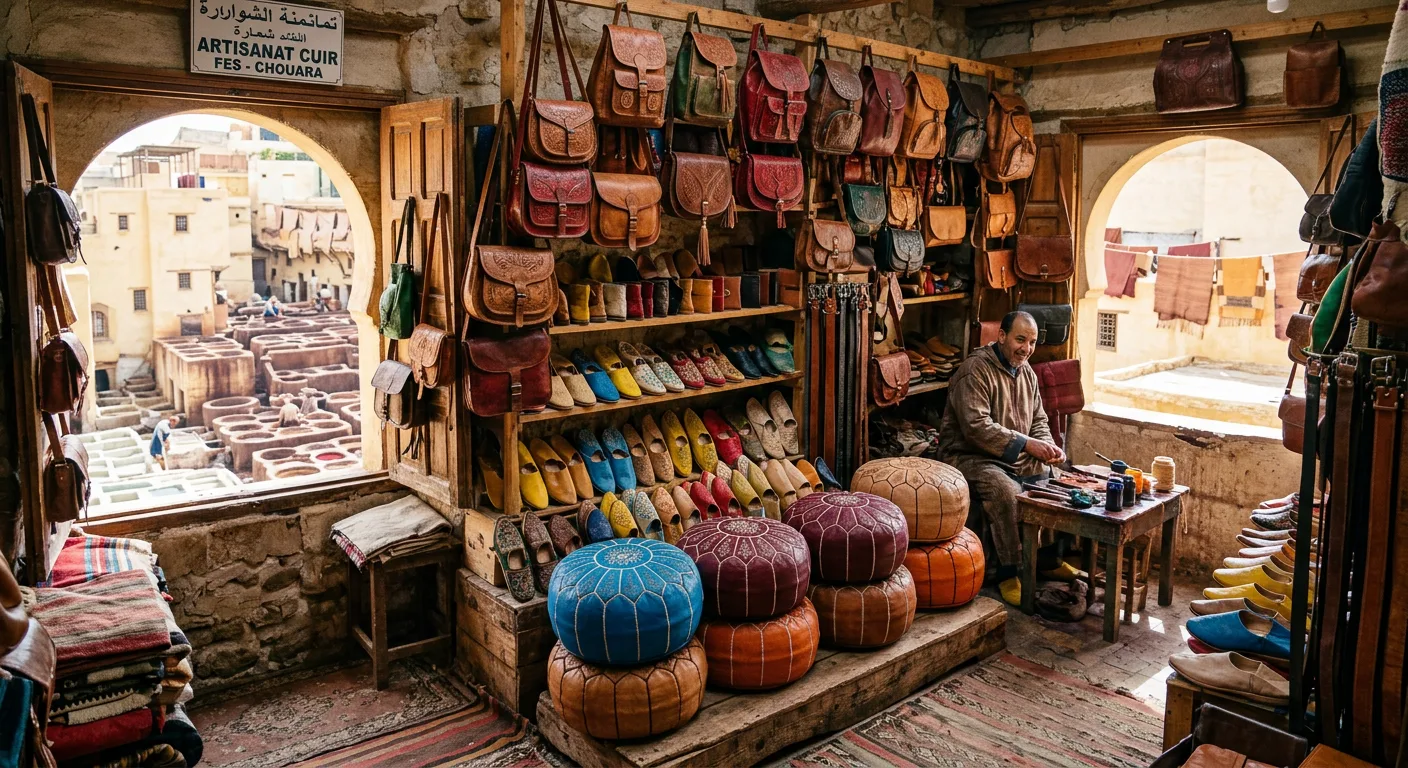
Bargaining in Essaouira is not the high-stakes theatre of the big-city souks. This is a laid-back coastal town, and shopping here is gentler — a brief, friendly exchange over a glass of mint tea that ends with a fair price and a handshake. Push too hard and you simply come across as graceless. We explain it here the way we explain it to our clients: honestly, without sentimentality, and with actual numbers.
Why the asking price is not always the real price
In the thuya-wood workshops, jewellery shops and souvenir stalls of the Essaouira medina, the first price a vendor names for a carved box, a piece of silver, a raffia bag or a bottle of argan oil often carries a little air — a starting point that assumes some polite negotiation. Buying at the very first figure simply means the vendor has done well. This is not dishonest; it is the rhythm of a souk that predates fixed pricing by centuries.
The important corollary: this only applies to a narrow set of goods. Supermarkets, pharmacies, the port fish stalls (priced by weight) and most modern shops display fixed prices. Many argan women's cooperatives sell at fair fixed prices that support local livelihoods. When in doubt, ask whether the price is taman (fixed) before you pick anything up.
The mechanics of a negotiation
Where bargaining does apply, a friendly Essaouira negotiation follows a recognisable arc:
- The vendor names an opening price. In Essaouira this is usually only 20–50% above what they will ultimately accept — far less inflated than in the big-city souks.
- You express interest without urgency — look at the item, ask about it, perhaps look at alternatives. Visible enthusiasm nudges the price up.
- You counter at around 60–75% of the asking price. Do not apologise for the counter-offer. State it simply and with a smile.
- The vendor comes down a little, you come up a little. The aim is to converge around 75–85% of the original ask for most goods — a modest discount, not a halving.
- When a price feels fair, accept. If it does not, you can walk away — calmly, without hostility. A vendor who has room will call you back; one who does not will let you go.
Fair price ranges to have in mind
The market changes and varies by shop, but these are reasonable benchmarks for the Essaouira medina in 2025–2026 (MAD = Moroccan dirham):
| Item | Fair price range (MAD) |
|---|---|
| Small thuya-wood box or trinket | 40–120 MAD |
| Bottle of culinary argan oil (250 ml) | 80–150 MAD |
| Jar of amlou spread | 40–90 MAD |
| Raffia bag or pair of slippers | 100–300 MAD |
| Thuya-wood chess set or inlaid box, medium | 300–800 MAD |
| Silver bracelet (genuine, hallmarked) | 250–800 MAD |
| Small painting from a medina gallery | 400–1,500 MAD+ |
| Hand-woven rug or blanket, small | 600–2,000 MAD |
These are finished prices — what you pay after a polite negotiation, not starting offers. If a vendor opens far above these figures, your counter should land near these numbers. If a vendor opens close to them, the price is already reasonable and there is little room to move.
Phrases that help
You do not need fluent Darija — and French is widely understood in Essaouira — but a few words used naturally signal warmth and that you have arrived prepared:
- Bsh-hal? — How much?
- Ghali bzzaf — Too expensive (said with a smile, not a grimace).
- Mumkin takhfid? — Can you give a discount?
- Wakha — OK / good (used to close a deal).
- La, shukran — No thank you (said warmly, useful for declining a persistent pitch).
- Zwin bzzaf — This is very nice (a friendly opener).
English and French are both widely spoken in Essaouira's shops, so you will rarely struggle. But a 'salam' on entering and a 'shukran' on leaving go a remarkably long way here.
Walking away — and when to mean it
Walking away is a legitimate tool, though in Essaouira's gentler culture it carries less drama. A vendor who calls you back may have a little room; one who lets you go has probably offered close to a fair price. The rule is this: only walk away if you are prepared to leave. If you walk away, then turn back and pay the original price, you have given up your position and a little goodwill.
If the price is genuinely fair and you want the item, buy it. Prolonged haggling over a small thuya box wastes everyone's time and the warmth of the exchange disappears.
What to watch for in tourist areas
Most Essaouira traders are straightforward and genuinely hospitable. A few things are worth knowing in the busiest medina lanes:
- Diluted "argan oil". Cheap, watery bottles are often cut with other oils. Real argan is dense and nutty and not cheap — buy from a women's cooperative for the genuine article.
- Plastic "inlay" thuya. Check the inlay is wood, bone or mother-of-pearl and that boxes close cleanly. The workshops under the ramparts let you watch the carving.
- The unofficial guide. Someone attaches themselves to you in the souks, narrates, then expects a fee. There is nothing wrong with hiring a local — but agree the price up front, before they start.
- The port fish price. At the grill stalls, confirm the price by weight before your fish goes on the coals, so there is no surprise at the table.
Buying from a recognised cooperative or a guide-recommended workshop in the places we cover removes almost all of this friction — and keeps more of your money with the makers themselves.
Frequently asked
Is haggling expected in Essaouira's souks?
Mildly — and far more gently than in Marrakech or Fes. In the thuya-wood workshops, souvenir stalls and jewellery shops of the medina, asking prices have some give and a polite negotiation is normal. But Essaouira is a laid-back town: argan cooperatives, the port grills and many craft shops are essentially fixed-price, and pushing too hard is considered rude.
How much should I offer when haggling in Essaouira?
Where bargaining applies, a reasonable counter is around 60–75% of the first asking price, settling perhaps 15–25% below the original ask. Essaouira vendors generally start closer to the real price than the hard-selling souks of the big cities, so a modest, friendly negotiation is appropriate — not the halving you might attempt elsewhere.
What are some useful phrases for shopping in Essaouira?
A few words go a long way. In Moroccan Arabic (Darija): 'Bsh-hal?' (How much?), 'Ghali bzzaf' (Too expensive), 'Wakha' (OK), 'Shukran' (Thank you) and 'La, shukran' (No thank you). French is also widely understood here. A smile and 'salam' on entering matter as much as the words.
What items have fixed prices in Essaouira?
Supermarkets, pharmacies and modern shops have fixed prices, as do the port fish stalls (priced by weight) and many argan women's cooperatives, which display fair fixed prices and support local livelihoods directly. The thuya workshops and souvenir stalls are where bargaining applies. When in doubt, ask if the price is 'taman' (fixed) before negotiating.
What should I watch out for when shopping in tourist areas?
In the busiest medina lanes, prices for thuya boxes, jewellery and 'argan oil' can be inflated for visitors, and cheap watery 'argan' is often diluted — buy from cooperatives for the real thing. Unofficial guides who attach themselves to you and then expect a fee are common; agree any price up front. At the port, confirm the price by weight before your fish goes on the coals.
Is it rude to walk away during haggling?
Walking away is acceptable, but in Essaouira's gentler culture it carries less theatre than in a hard-haggling souk. A vendor who lets you go has likely offered a fair price; one who calls you back may have a little room. Keep it warm and unhurried. If you have no intention of buying, it is better not to start an extended negotiation in the first place — hospitality here is sincere and shouldn't be exploited.
Shop with confidence
Our guides know Essaouira's souks intimately — and the fair prices within them.
Every Essaouira Tours itinerary includes access to our licensed guides, who navigate the souks with you, make introductions to carvers and cooperatives they trust, and ensure you pay fair prices without anxiety.
Plan your Essaouira visit