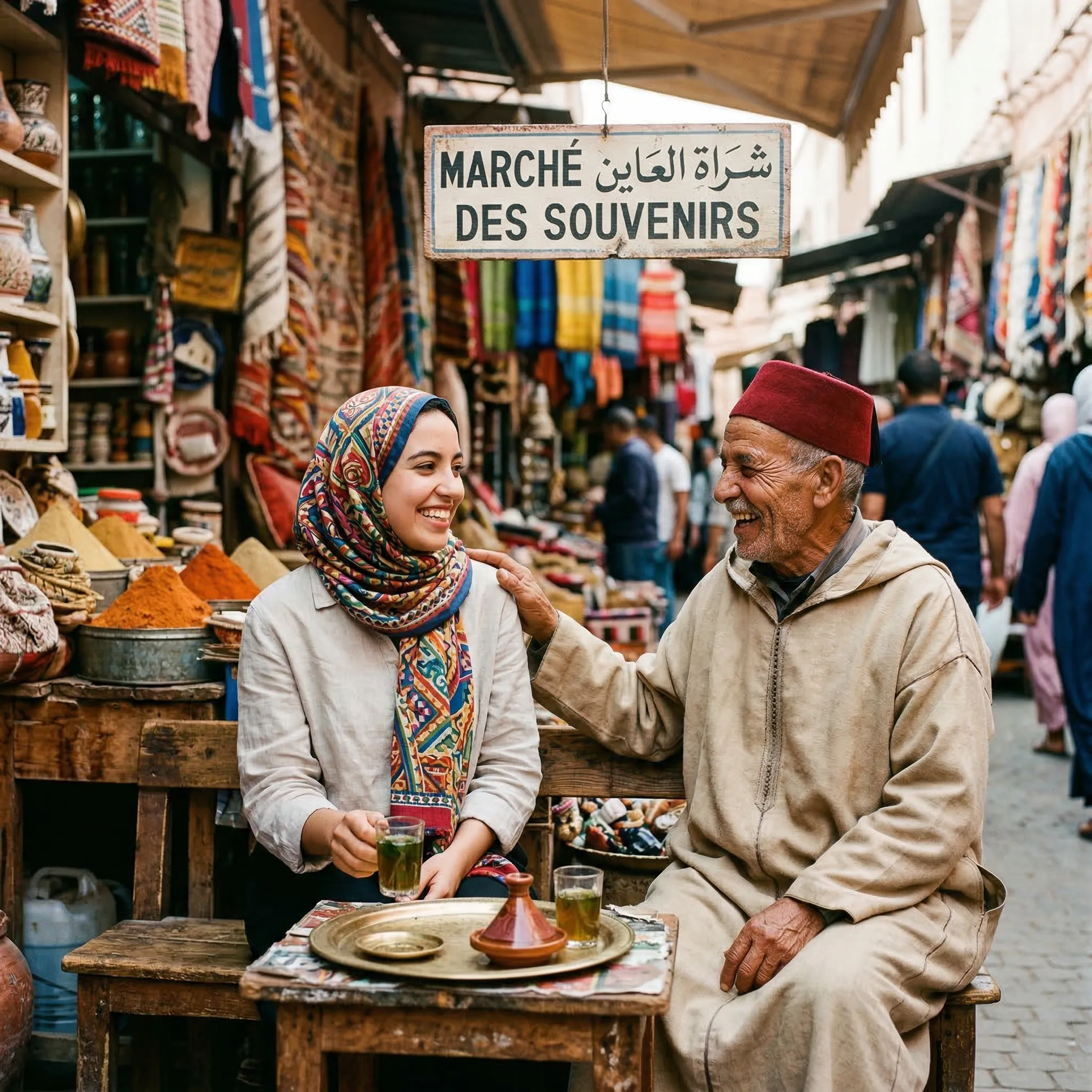
Before any conversation in Morocco, before any deal, before any meal — there is tea. Atay, the sweet, mint-scented green tea poured from a height from a long-spouted berrad into a small glass, a crown of foam on top. It is not simply a drink. It is an act of welcome, and in Moroccan culture a near-sacred matter of hospitality and honour.
Where did the ritual come from?
Green tea reached Morocco through European trade in the nineteenth century and was quickly married to the local love of fresh mint and sugar, becoming woven into daily life from the cities to the desert. Offering a guest tea was — and remains — a declaration of welcome. The ceremony of the high pour, the silver-coloured pot and the small glasses spread across the whole country, and in a port town like Essaouira, with its old Andalusian, Jewish and trading heritage, the glass of tea on a rooftop is part of the rhythm of the day. The gunpowder green tea, the spearmint and the sugar are the signatures of the Moroccan version.
How is Moroccan mint tea actually made?
The process is deliberate and unhurried. Gunpowder green tea is rinsed with a first splash of hot water (poured off to soften the leaves), then brewed strong in the berrad with a generous bunch of fresh spearmint and a good quantity of sugar — often a broken cone of it. The host pours a glass and returns it to the pot a few times to mix, then pours from a height into small glasses to raise the prized foam. In summer the mint takes the lead; in winter you may find it brewed with wormwood (shiba) or a little verbena. The pour is part of the welcome: pot raised high, glass held low, a small performance for the guest.
What does the tea actually signify?
In Moroccan tradition the glass carries meaning beyond refreshment. To serve a guest tea is to offer welcome under your roof; to refuse outright can read as cold. There is a Maghrebi saying about the three glasses of a single serving — the same leaves re-steeped — 'gentle as life, strong as love, bitter as death', each glass a little different. To accept the tea is to accept the host's hospitality with grace. Call atay the heart of Moroccan welcome to a local and you will get a smile of recognition: this ritual is a point of genuine pride, shared across the country.
What is the etiquette for guests?
A few points of etiquette matter. Accept the glass with your right hand, and mind that it is hot — hold the rim and base. Do not rush; the conversation is the point. Accepting all three glasses of a serving is the gracious thing, but one is fine if you must decline more. In a shop or souk, accepting tea does not obligate you to buy anything, whatever the sales pressure implies — it is a sincere gesture of welcome, and you can leave gracefully after the glass. In a home or a riad, lingering over the tea is itself the compliment.
Are there regional variations across Morocco?
Yes. In the Sahara and the south, tea is at its most ceremonial — brewed over coals in front of you and poured with theatrical height. In the Atlas, you may find it heavier with wormwood in winter. On the Atlantic coast around Essaouira, a glass of mint tea on a rooftop as the afternoon wind drops is one of the town's quiet pleasures, often taken with a plate of almond pastries or a spoonful of amlou. And everywhere, from a medina café to a roadside stall, you will be handed a small glass of sweet tea — and it will be just as warmly meant.
Can you recreate it at home?
With a little attention, yes. Gunpowder green tea, a generous bunch of fresh spearmint and sugar are the three non-negotiable ingredients; a long-spouted berrad is the ideal vessel but a teapot works, and the high pour comes with practice. Many of our guests bring a berrad and tea glasses home from the souk as the most evocative souvenir they could have chosen.
Frequently asked
What is Moroccan mint tea and how is it different from regular tea?
Moroccan mint tea — atay or 'Moroccan whisky' as locals joke — is gunpowder green tea brewed strong with a generous bunch of fresh spearmint and plenty of sugar. It is poured from a height from a long-spouted silver-coloured pot (the berrad) into small glasses to create a frothy head. Unlike a plain cup of tea, it is sweet, aromatic, refreshing in the heat, and served as a gesture of welcome rather than a quick drink.
Why is the tea poured from so high?
Pouring from a height aerates the tea, builds the prized layer of foam (the 'crown') on top of each glass, and cools it slightly so it can be sipped. It is also simply part of the show of hospitality — a skilled pour, glass held low and pot raised high, is a small performance offered to a guest.
How many glasses is it polite to accept?
There is a Maghrebi saying that the three glasses of a serving are 'gentle as life, strong as love, bitter as death' — the same leaves re-steeped, each glass different. Accepting all three is gracious; one is fine if you must decline more. Refusing the first glass outright can seem cold, so it is polite to accept at least one.
Can you ask for tea with less sugar in Morocco?
You can — 'shwiya sukkar' (a little sugar) or 'bla sukkar' (without sugar) — and most hosts will oblige, though very sweet tea is the default and a sugarless request mildly surprises traditionalists. In a home or a riad, the tea is usually pre-sweetened in the pot, so ask before it is brewed if you can.
Is there a specific time of day for mint tea?
No fixed time — it is appropriate at any hour. Mint tea marks arrivals, deals, the end of meals and any pause in the day. In a shop or a home it is the first thing offered to a guest, and in Essaouira a glass on a rooftop as the afternoon wind drops is one of the town's quiet pleasures. The ritual is about hospitality, not the clock.
Experience it properly
Tea on a rooftop — your first afternoon in Essaouira.
Every Essaouira Tours itinerary opens with a welcome tea on arrival. We can also arrange a proper tea ceremony in a riad or with an artisan, including the history and technique behind the ritual.