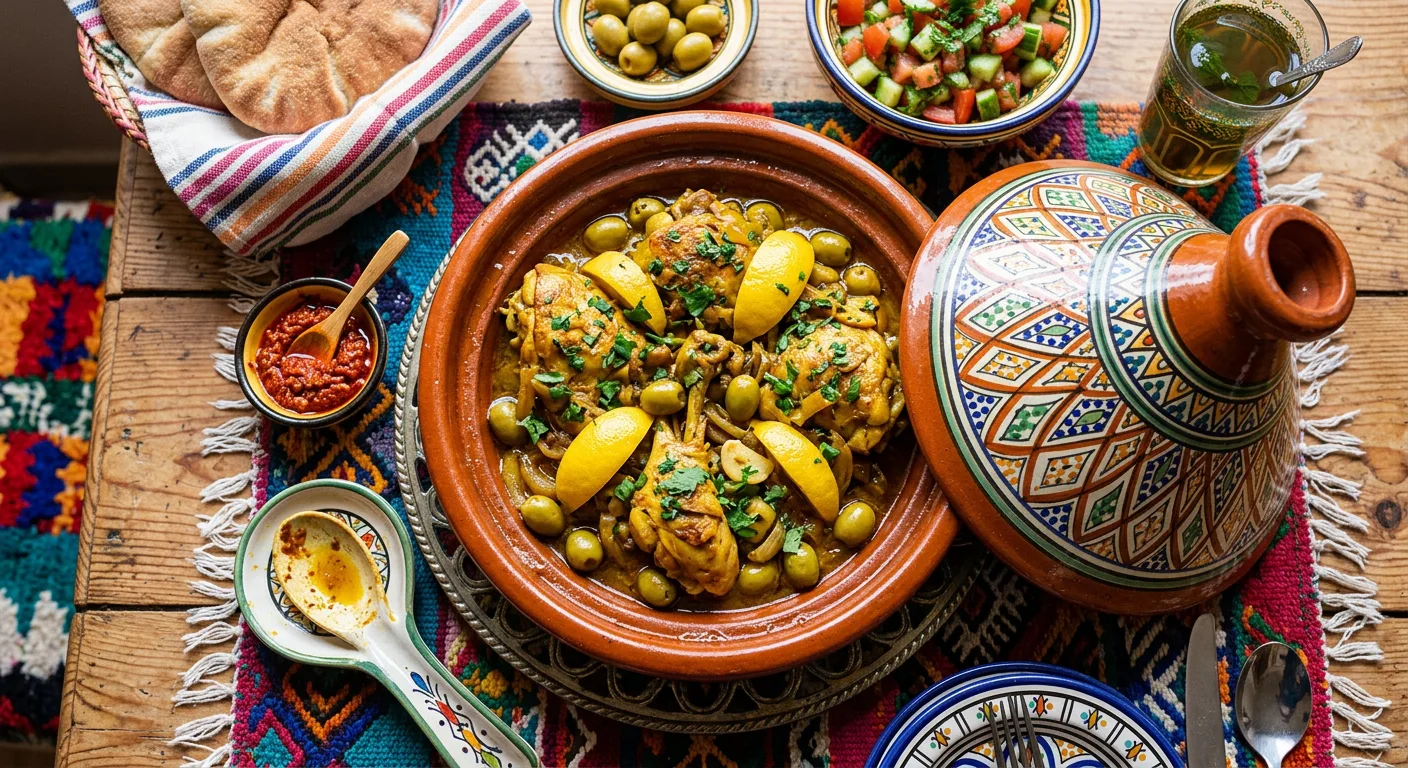
Essaouira's food is generous, salty-fresh and rooted in the sea and the argan plains. The tagines and mint tea you know from elsewhere in Morocco are real here — but they sit beside the things that define this town: fish landed that morning and grilled over coals, a fish tagine bright with chermoula, and a breakfast of bread, argan oil and amlou. Here is where to begin.
The dishes worth seeking out
Grilled fish from the port stalls is the dish to try first — pick your catch from the ice, agree the price by weight, and eat it cooked over coals with bread, salad and lemon. Sardines, sea bream, calamari and prawns are the staples; lobster if you splash out.
Fish tagine — white fish layered with tomato, peppers and a green chermoula marinade of coriander, garlic and preserved lemon, slow-cooked in the conical pot — is the sit-down counterpart, and the dish to order when you want comfort rather than the grill. It is everyday glory at its best.
Amlou is the breakfast no visitor should miss: a thick, nutty spread of ground almonds, argan oil and honey, scooped onto warm bread. It is a specialty of the argan country around the town. Our guides know exactly where to go.
The port grills and street snacks
The grill stalls between the harbour and Place Moulay Hassan are the best food theatre in town — the catch on the ice, the smoke over the coals, the communal tables. The turnover is high and the food is cooked in front of you, so choose busy stalls and you'll eat brilliantly for very little.
In the medina souks, look for msemen (flaky griddle bread), bissara (a warming fava-bean soup eaten for breakfast) and bowls of olives and pickles. End a wander with a glass of mint tea on a rooftop as the afternoon wind drops — it is the local pause, sweet, hot and restorative.
Tagines, rooftops and the home-style table
The best sit-down eating in Essaouira is around Place Moulay Hassan and on the riad rooftops, where the fish tagine, vegetable tagines and seafood pastilla are done well with a view of the masts and the wind. A proper spread of salads — zaalouk, taktouka, lentils, beetroot — arrives first, meant to be shared slowly. Order generously; this is how the town eats.
For something more intimate, a home-style or social-enterprise kitchen is the equivalent of the family table: a real fish tagine cooked by someone who has made it their whole life, often supporting a local community. The quality frequently beats any restaurant. We include home and cooperative dinners in our private itineraries.
Bread, argan oil and spices
Bread is treated with respect in Morocco — warm khobz accompanies nearly every meal, and the neighbourhood ovens fill the morning streets with the smell of fresh dough. Your guide can take you to one.
Essaouira's hinterland produces excellent argan oil, both culinary and cosmetic, and the local pantry leans on cumin, saffron, paprika and the blend ras el hanout. A bottle of good culinary argan oil and a jar of amlou are among the most evocative edible souvenirs you can carry home; buy from a reputable cooperative rather than a street stall for quality.
Drinks: tea, coffee and juice
Sweet mint tea, poured from a height to raise a crown of foam, is the rhythm of Moroccan hospitality, offered everywhere from a souk stall to a riad rooftop. Strong coffee and almond-milk drinks are widely available. Accepting a glass is a social act; it carries real warmth.
Fresh juice stalls sell orange and other juices cheaply and excellently. Morocco is a Muslim country but relaxed about alcohol in tourist towns: it is served in licensed restaurants and some hotels in Essaouira, though not in every casual eatery. Read our full Essaouira destination guide.
Frequently asked
What is the must-eat dish in Essaouira?
Grilled fish straight off the boats at the port stalls is the essential Essaouira experience — pick your catch from the ice and have it cooked over coals. The other thing visitors most often describe as a revelation is the Essaouira fish tagine, white fish slow-cooked with chermoula and preserved lemon. Don't leave without trying amlou, the almond-argan-honey spread, at breakfast.
Is the port fish at Essaouira safe and good value?
Yes — the grill stalls have very high turnover, the fish is landed that morning, and it's cooked to order in front of you. The main things are to choose a busy stall and to agree the price by weight before it goes on the coals. Done that way, it's some of the freshest, cheapest seafood in Morocco.
What are the best areas for food in Essaouira?
The port grills between the harbour and Place Moulay Hassan for fresh fish. Place Moulay Hassan and its surrounding lanes for cafés, rooftop restaurants and tagines. The medina souks for street snacks, spices, argan and amlou. The beachfront for relaxed seafood with a view of the surf.
Are there good vegetarian options in Essaouira?
Yes — vegetable tagines, zaalouk and taktouka (aubergine and pepper dips), lentils, harira soup, salads, and bread with argan oil and amlou make a full, satisfying meal with no fish or meat. Vegetarian and vegan diners eat well here; just check for butter (smen) or honey in cooked dishes.
What is amlou and is it worth seeking out?
Amlou is a thick spread of ground roasted almonds, argan oil and honey — nutty, sweet and addictive, eaten on bread at breakfast. It is a specialty of the argan-growing region around Essaouira and unlike anything in Western cooking. You can buy it (and argan oil) from women's cooperatives as an excellent edible souvenir.
When should you eat in Essaouira — are restaurant hours different from Europe?
Moroccan meal times skew a little later than northern Europe. Lunch runs roughly 1–3 pm; dinner from 8 pm onwards. The port grills are busiest around lunch and the catch. During Ramadan, many places close until the sunset f'tour and then fill instantly — plan around it and book ahead.
Eat like you live here
Our private food tours go beyond restaurants — into the port, the souk and the kitchen.
Essaouira Tours curates half-day and full-day food experiences for guests who want to understand what they are eating, not just photograph it.
Enquire about a food experience