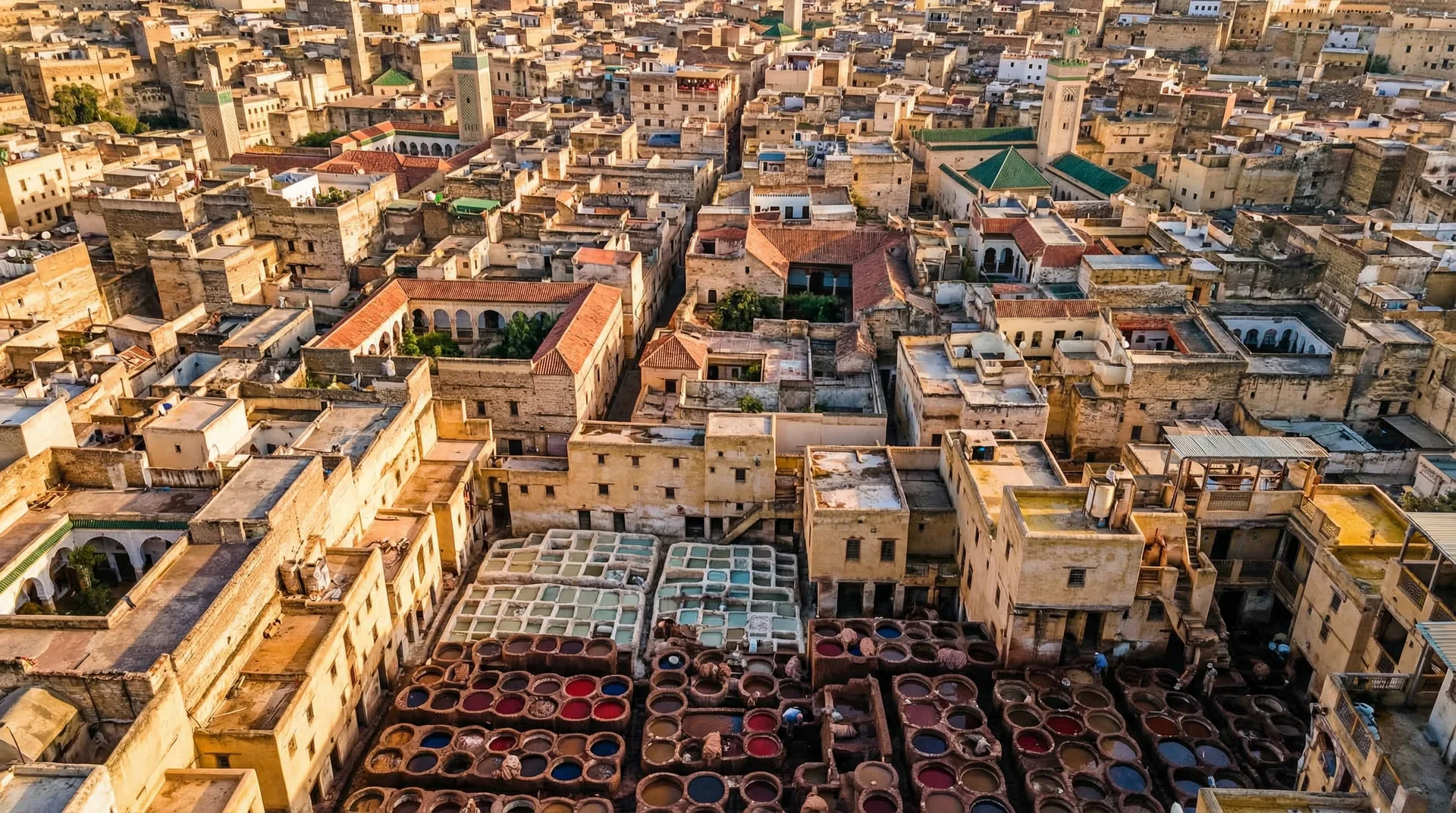
Yes — Morocco is one of the safest and most welcoming countries in North Africa for travellers, and Essaouira is among its most relaxed corners: a small, grid-planned port medina where the hustle is gentle and the pace is unhurried. The main day-to-day issues are petty scams and a little market hassle, both easily managed.
In this guide
The honest picture
Morocco is politically stable, used to international visitors, and set up for tourism from the airport to the medina. Violent crime against tourists is rare. The realistic concerns are the same as in any busy destination: pickpocketing in crowded souks, overcharging, and persistent (rather than dangerous) hustling from unofficial 'guides'. Essaouira feels notably calmer than Marrakech or Fes on all three counts — its Portuguese-laid grid is hard to get lost in and the harbour-town atmosphere is famously easy-going.
Travelling with a licensed driver-guide removes most of the friction on the wider trip — you skip the navigation, the haggling over taxis, and the false-guide approaches entirely, whether you are walking Essaouira's ramparts or heading inland to Marrakech.
Common scams and how to sidestep them
A handful of medina classics account for most traveller complaints. None are dangerous; all are avoidable.
- 'This way is closed' — a stranger redirects you toward a shop for a tip. Politely decline and keep walking; Essaouira's straight medina lanes make this easy to ignore.
- Unofficial guides at the harbour and the main gates (Bab Doukkala, Bab Marrakech). Use a licensed guide arranged in advance; ask for the badge.
- Taxi and harbour-stall overcharging. Agree the fare or the fish price first, or use a private transfer with a price fixed in writing.
- Photo 'gifts' on the ramparts or with the harbour gulls that turn into a charge — agree a price or decline up front.
Practical safety
Tap water is best avoided for drinking — stick to bottled or filtered. Dress modestly away from the beach, especially in the medina and near religious sites. Solo and women travellers visit Essaouira in large numbers and rate it highly; a few sensible habits (covered shoulders in town, confident body language, registered transport after dark) go a long way. One coast-specific caution: the Atlantic off Essaouira's beach is powerful, with a rip current near the Oued Ksob river mouth — swim with care. Keep digital copies of your passport, and carry your riad's address for taxis.
Frequently asked
Is Morocco safe for solo female travellers?
Many women travel Morocco solo successfully every year, and Essaouira is consistently named one of the easiest places to do it — small, walkable and low-pressure. Expect some attention and persistent vendors rather than danger. Dressing modestly in town, projecting confidence, and using arranged transport and licensed guides makes the experience smooth and rewarding.
Is it safe to walk in the medina at night?
In Essaouira, the main arteries (Avenue de l'Istiqlal, the harbour and the ramparts) stay lively and are generally fine, and the compact grid is far harder to get lost in than Marrakech or Fes. The quieter residential lanes thin out late; after dark, stick to the main routes or take a petit taxi back to your riad.
Do I need any vaccinations for Morocco?
No special vaccinations are required for most travellers; routine vaccinations should be up to date. Check current advice from your doctor or a travel clinic before you go.
Planning a trip?
Let an Essaouira atelier handle the details.
Tell us your dates and style and we'll send a written itinerary and a transparent quote within 24 hours.
Request an itineraryKeep reading
Planning
The Best Time to Visit Morocco
Spring (March–May) and autumn (September–November) are the best all-round times to visit Morocco — and if you base yourself on the Atlantic in Essaouira, the breezy coast stays comfortable even when the interior bakes. Here is how the seasons play out across the windswept port, the medinas, the High Atlas and the Sahara.
Culture
Morocco Etiquette & Customs
A little cultural awareness goes a long way in Morocco. Dress modestly in town, greet warmly, ask before photographing people, use your right hand, and embrace the unhurried pace — something Essaouira, with its café terraces and Gnaoua rhythm, does better than almost anywhere.
Practical
Getting Around Morocco
Morocco has good trains between the main northern cities, comfortable intercity buses, and — for the coast, the south and the desert — private drivers. Essaouira sits off the rail map, so reaching it means the bus (Supratours and CTM) or a private car from Marrakech. The right mix depends on your route and pace.