01Gates
Bab Doukkala & the main avenue
Enter through the northern gate of Bab Doukkala and follow Avenue de l'Istiqlal, the spine of the medina. The straight line is Cornut's signature and the easiest way to keep your bearings.
Things to do · Essaouira
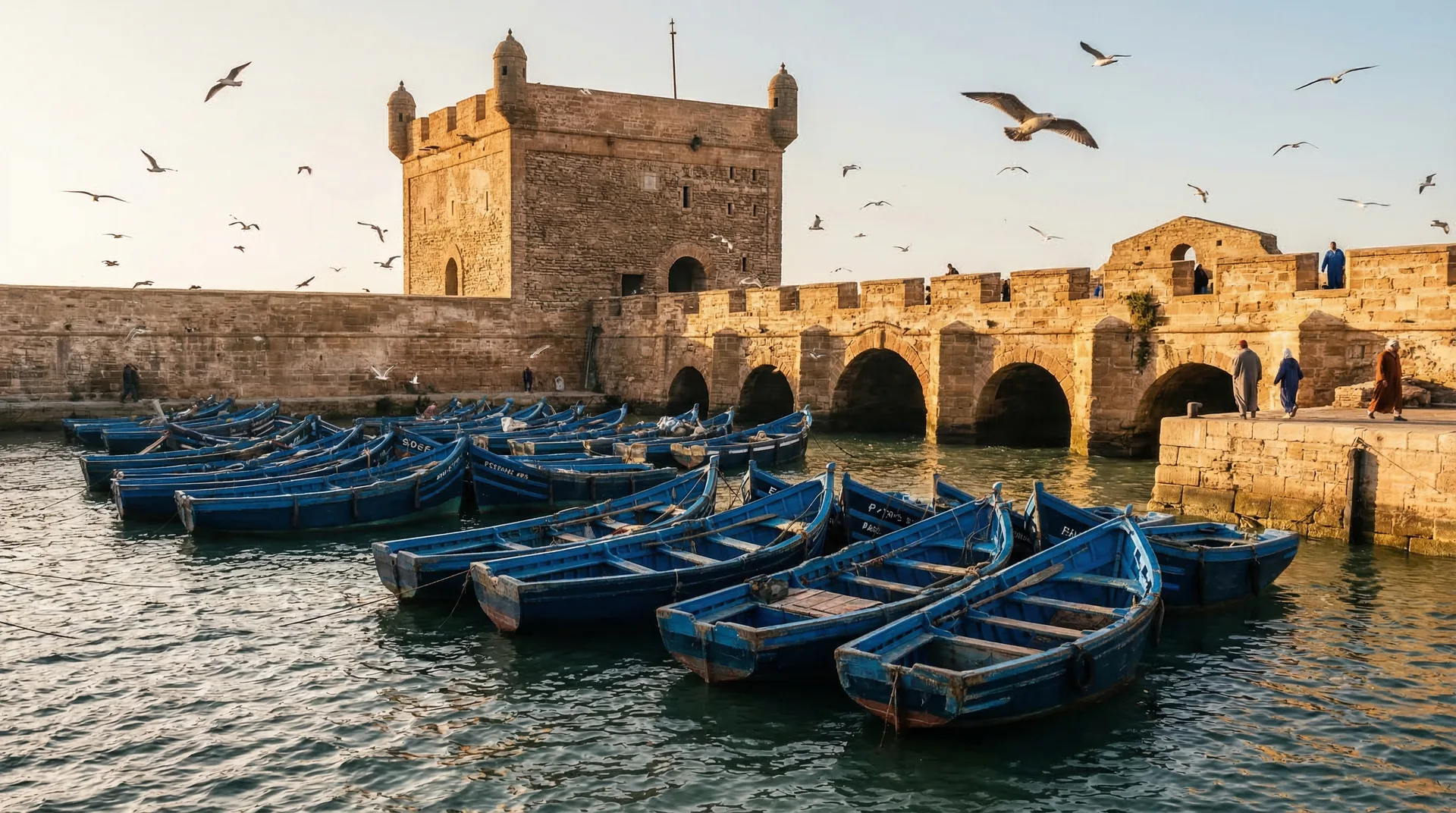
Essaouira's medina is a rare thing in Morocco — a fortified old town you can actually navigate. Designed in the 1760s by the French engineer Théodore Cornut for Sultan Sidi Mohammed ben Abdallah, it follows a near-grid of straight avenues behind ramparts, and it has been a UNESCO World Heritage site since 2001. This is a route through its gates, souks and squares.
6 experiences
Enter through the northern gate of Bab Doukkala and follow Avenue de l'Istiqlal, the spine of the medina. The straight line is Cornut's signature and the easiest way to keep your bearings.
Midway along the medina the market quarters open up — spice mounds, olives, dried fruit and the daily produce that feeds the town. The covered grain market, the Joutia, sits just off the main lanes.
Climb the sea-facing bastion lined with old bronze cannons, a stretch of wall that has stood in for film sets from Orson Welles' 'Othello' to Game of Thrones. The thuya woodworkers cluster in the vaults below.
The medina's open heart, a palm-lined square of cafés where the town gathers and the festival stages rise each June. It marks the seam between the residential lanes and the harbour.
The northern corner holds the historic Jewish quarter, or Mellah, a reminder of Essaouira's long role as a cosmopolitan trading port. Some lanes are weathered, but the heritage runs deep.
The eastern gate that once opened the caravan road inland. Around it the medina feels more local and lived-in, a good place to end a loop before stepping back outside the walls.
Yes, unusually so. The medina follows a straight, near-grid plan designed in the 1760s, so it is far easier to walk than the tangled lanes of Fes or Marrakech. Most visitors find their way without a guide.
Yes. The medina of Essaouira (formerly Mogador) was inscribed as a UNESCO World Heritage site in 2001, recognised as a well-preserved example of a late-18th-century fortified European-influenced town in North Africa.
A relaxed loop through the main avenue, souks, ramparts and Place Moulay Hassan takes two to three hours, more if you stop to shop for thuya woodwork or browse the galleries and cafés.
Not for navigation, since the layout is simple. A guide is worth it if you want the history of the port, the Mellah and the ramparts explained, but many visitors happily explore on their own.
See it with a local
We'll build a private, guided plan around the experiences you care about — with a driver, hand-picked riads and a written quote in 24 hours.
Contact us for pricingMore cities