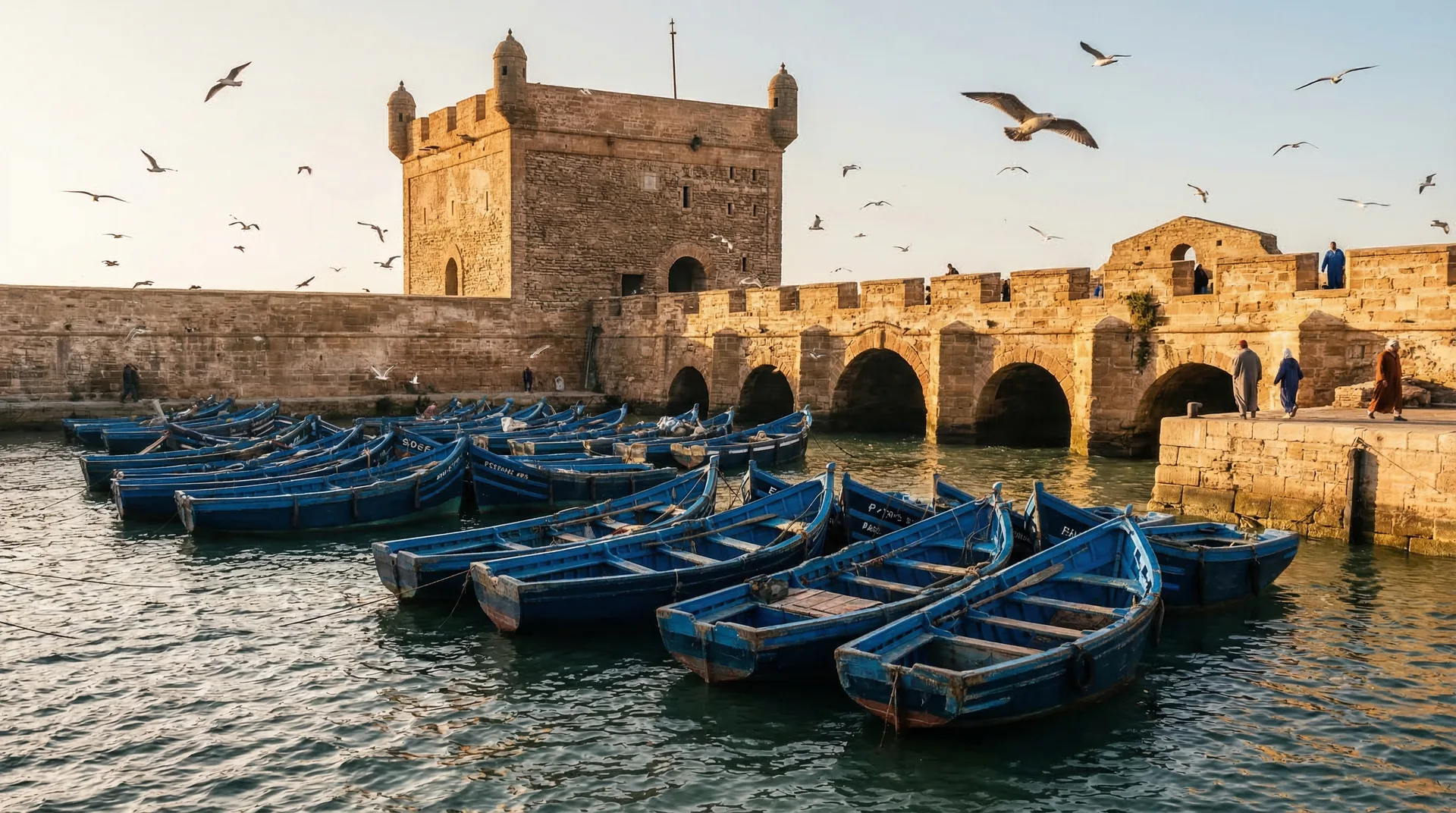
Essaouira keeps things refreshingly simple: there is no truly bad time to visit. Sitting on the open Atlantic, the town enjoys a very mild, breezy climate that almost never turns hot and rarely turns cold. What changes through the year is the wind, the warmth and the crowds — and how you weigh those depends on whether you've come to surf, to wander the ramparts or simply to escape the inland heat. Below is an honest, month-by-month sense of what to expect. These are typical, approximate norms rather than guarantees, so always check a current forecast close to your travel dates.
The short answer: it depends what you want
For warmth with a little less wind, aim for the shoulder months — roughly April to June and September to October. For the strongest, most reliable wind for windsurfing and kitesurfing, target midsummer (June to September). And if you're coming to escape Morocco's inland summer heat, Essaouira's cool Atlantic breeze makes it a popular bolt-hole from June through August — just expect company and book ahead.
Essaouira's climate at a glance
One feature defines this coast: the wind. The alizé trade winds blow for much of the year, which is why Essaouira is nicknamed Morocco's "Wind City" and became a watersports capital. The Atlantic keeps temperatures mild and even — summers are cool-to-mild for Morocco (around 18–24°C) and at their windiest; winters are mild and a little wet (around 13–18°C). Spring and autumn sit gently in between, with a touch less wind. It almost never gets very hot.
| Season | Feel | Typical highs | Wind |
|---|---|---|---|
| Spring (Mar–May) | Gentle, fresh, fine light | ~17–21°C | Moderate |
| Summer (Jun–Sep) | Cool-to-mild, breezy escape | ~18–24°C | Strongest |
| Autumn (Oct–Nov) | Warm, calmer, quieter | ~19–22°C | Moderate |
| Winter (Dec–Feb) | Mild, some rain, dramatic skies | ~13–18°C | Variable |
Figures are approximate, typical norms for orientation only — coastal weather varies day to day, so check a live forecast before you travel.
Month by month
January & February — quiet and atmospheric
The calmest months for crowds. Days are mild (around 13–18°C) with some Atlantic rain and big, cinematic skies over the ramparts. Nights are chilly and damp. It's a wonderful time for slow wandering, photography and seafood with the medina largely to yourself — just pack warm layers and confirm your riad has heating.
March — spring stirs
Days lengthen and warm gently, the light turns lovely and the worst of the winter damp eases. Wind is moderate. A quietly rewarding month before the busier season, with good value on accommodation.
April to June — the sweet spot
For many visitors this is the best window: pleasantly warm days, fine light and a touch less wind than high summer — comfortable for the beach, the ramparts and long medina days alike. By June the wind builds and the season picks up. Note that the Gnaoua and World Music Festival usually lands in June, filling the town and its rooms; the dates shift yearly, so check the official schedule and book early either to catch it or to avoid the crush.
July & August — windy and the busiest
The peak of the wind and the peak of the crowds. While inland Morocco bakes, Essaouira stays cool-to-mild (around 18–24°C) and breezy, making it a beloved summer escape for Moroccan and international visitors alike. This is prime time for windsurf and kitesurf, less so for flat beach sunbathing — the afternoon breeze can feel cool, so bring a windbreaker even now. Book accommodation and tables well ahead.
September & October — arguably the best of all
As the summer rush fades, the warmth lingers, the wind eases a little and the town exhales. Many regulars name this their favourite stretch: warm, gentler air, fine light and fewer people, with the sea still inviting. Excellent for almost everything except the very strongest wind sports.
November & December — into the mild winter
Cooler and quieter, with the first proper Atlantic weather rolling in — mild days, some rain and atmospheric skies. Good value and uncrowded, ideal for travellers who prefer a contemplative Essaouira and don't mind packing a warm, windproof layer.
What to pack, by season
Whatever the month, one rule holds: bring a windbreaker. The breeze is Essaouira's constant companion and catches first-timers out even in July.
- Spring & autumn: light layers, a windproof outer for the beach and ramparts, sunglasses and sunscreen. Add a warmer layer for cooler evenings.
- Summer: breathable clothes plus a fleece or windbreaker for the afternoon breeze, sun protection, and something to keep blown sand out of your eyes on the beach.
- Winter: warm layers, a properly windproof and water-resistant jacket, and closed shoes — nights are chilly and damp. Check your riad has heating.
- Surf days, any season: the schools supply boards and wetsuits, so you mainly need swimwear, a rash vest, reef-safe sunscreen and a warm layer for before and after.
A note on festivals, Ramadan and crowds
Two moving dates are worth planning around. The Gnaoua and World Music Festival (typically June) is the town's signature event and a joy, but it fills accommodation and the medina — its dates vary each year, so check before booking. Ramadan shifts roughly eleven days earlier annually, drifting across the seasons; during the fasting month some venues keep reduced daytime hours and evenings come alive after the fast is broken. Neither should put you off — both can deepen a visit — but confirm dates and opening hours in advance.
For help matching your travel window to the weather, the wind and what's on, see our Essaouira travel guides or explore our private tour options.
Frequently asked
What is the best month to visit Essaouira?
For most visitors, the shoulder months — roughly April to June and September to October — offer the best balance: pleasantly warm days, a touch less wind than midsummer and gentler crowds. If you've come for windsurfing or kitesurfing, the windiest stretch of June to September is ideal. There's no truly bad month, though: Essaouira's Atlantic climate is mild year-round.
Is Essaouira always windy?
Famously, yes. The alizé trade winds blow along this coast for much of the year, which is exactly why Essaouira earned its nickname as Morocco's 'Wind City' and became a windsurf and kitesurf capital. The wind tends to be strongest through the summer afternoons and a little gentler in spring and autumn. Pack a windbreaker whatever the month — even in July the breeze can feel cool.
Does it ever get hot in Essaouira?
Rarely. The Atlantic and the constant breeze keep Essaouira cool-to-mild even when inland cities like Marrakech are baking. Summer highs are typically around 18–24°C — comfortable rather than hot. This is precisely why so many Moroccans and inland travellers treat Essaouira as a summer escape from the heat.
What is the weather like in Essaouira in winter?
Winters (roughly December to February) are mild rather than cold — typically around 13–18°C — with some Atlantic rain and dramatic skies. It's the quietest, most atmospheric time to wander the ramparts and medina, but nights are genuinely chilly and damp, so pack warm layers and check your riad has heating.
When is the Gnaoua festival in Essaouira?
The Gnaoua and World Music Festival is usually held in June and is the town's biggest event, drawing large crowds and filling accommodation well in advance. The exact dates shift from year to year, so check the official festival schedule before booking. If you want a quieter Essaouira, travel just outside the festival window.
How does Ramadan affect a visit to Essaouira?
Ramadan shifts roughly eleven days earlier each year, so its dates move across the seasons. During the fasting month some cafés and restaurants keep reduced daytime hours and the rhythm of the town changes, with evenings coming alive after the fast is broken. It's a fascinating time to visit if you travel respectfully — just confirm opening hours and plan meals ahead.
Time it right
Tell us when you can travel — we'll tell you what to expect.
Every guest gets a bespoke pre-trip briefing with the wind and weather outlook for their specific dates, festival and Ramadan notes, and our current on-the-ground advice. Just ask.
Request an itinerary