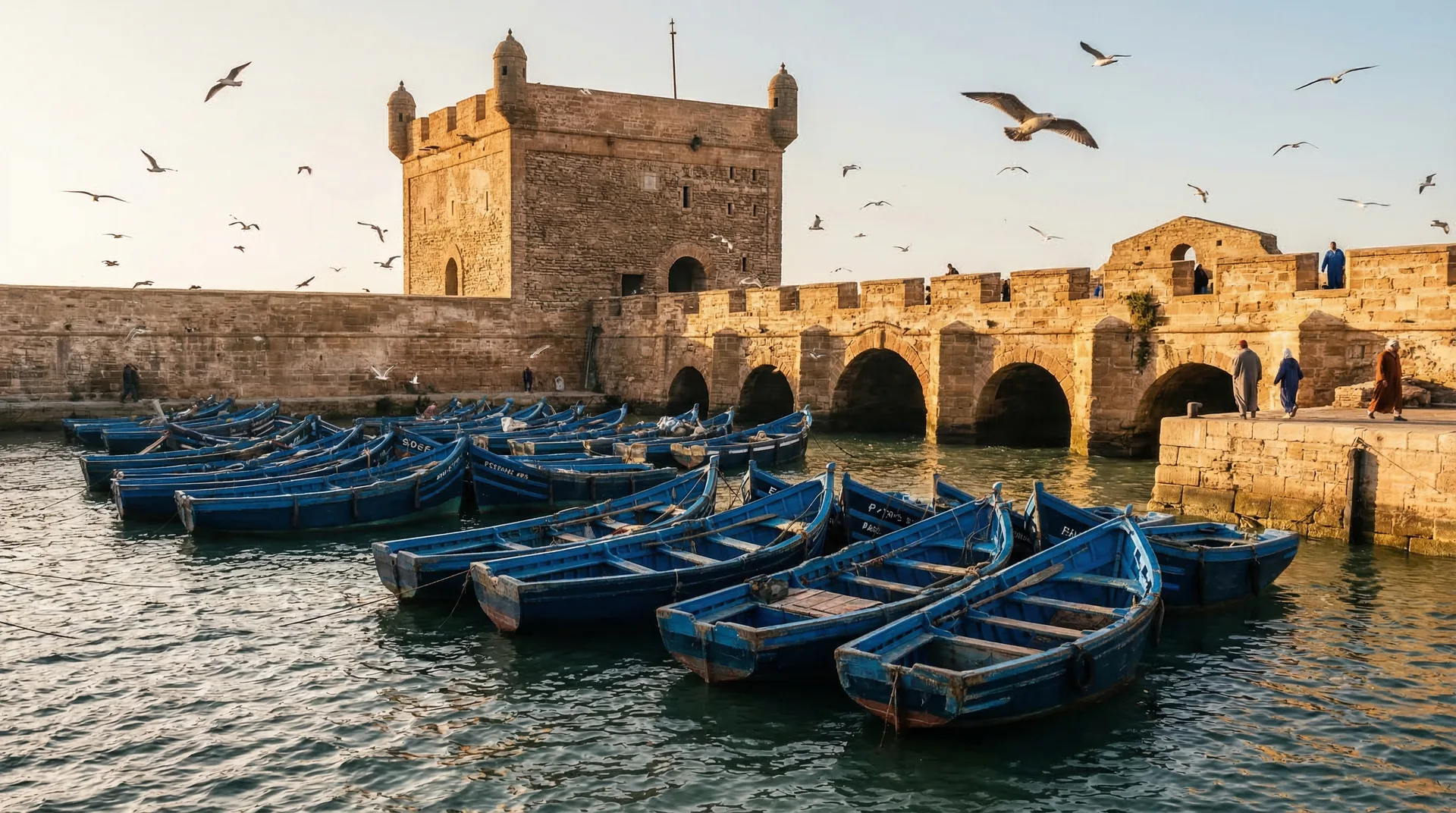
Essaouira in Summer vs Winter: When Should You Go?

When to visit · Essaouira seasons

Essaouira in Summer vs Winter: When Should You Go?

Essaouira's Atlantic position gives it one of Morocco's most temperate climates, but summer and winter feel very different — one windy, busy and festival-fuelled, the other mild, quiet and golden-lit.

Essaouira barely has extremes. While Marrakech bakes past 40°C in July and shivers on January nights, the Atlantic keeps Essaouira mild all year — summer highs hover around 23–25°C and winter days typically reach 17–19°C. What really changes between the seasons is the wind, the crowds and the mood. Summer is the windy, vibrant peak: the alizé blows hardest, the kite and windsurf beaches are full, and June brings the Gnawa & World Music Festival, when the whole town becomes a stage. Winter is the secret season: gentler winds, soft low-angle light photographers love, near-empty ramparts at sunset and noticeably lower room rates — though you trade away the warmest swimming and accept the odd grey, breezy or drizzly day.

Option A

Summer (June–September)

Peak wind, peak buzz — the Gnawa festival, full beaches and kite season

Best for

Wind-sport travellers, festival-goers and those escaping inland Morocco's heat

Full guide

Option B

Winter (November–February)

Mild, calm and uncrowded — soft light, empty ramparts and lower prices

Best for

Quiet-seekers, photographers, walkers and value travellers

Full guide

Side-by-side breakdown

Summer (June–September) vs Winter (November–February)

How the two stack up across the things that actually shape a trip — read down each column, or across each row.

Summer (June–September)Winter (November–February)
Summer (June–September) compared with Winter (November–February)
TemperatureSummer (June–September)Mild summer highs around 23–25°C; cool sea breeze all dayWinter (November–February)Mild winter days around 17–19°C; cooler evenings
WindSummer (June–September)Strongest alizé — prime kite and windsurf conditionsWinter (November–February)Lighter and more variable; calmer beach days
CrowdsSummer (June–September)Busiest — peak holiday season and festival weekendWinter (November–February)Quiet — ramparts and medina lanes often near-empty
EventsSummer (June–September)Gnawa & World Music Festival in June; lively nightlifeWinter (November–February)Fewer events; a calmer, more local rhythm
SwimmingSummer (June–September)Warmest sea of the year, though still cool and choppyWinter (November–February)Brisk — most prefer walking the beach to swimming
Light & photographySummer (June–September)Bright, hazy afternoons; long eveningsWinter (November–February)Soft, golden low-angle light; dramatic skies
PricesSummer (June–September)Highest — especially around the festival weekendWinter (November–February)Lower room rates and easier last-minute availability
Best forSummer (June–September)Wind sports, festivals and beach buzzWinter (November–February)Walking, photography, relaxed sightseeing and value

Our verdict

Which should you choose?

Come in summer if your reason for visiting is the wind, the beach scene or the Gnawa festival — the town is at its most alive, and it is a cool refuge while the rest of Morocco swelters. Come in winter for the quieter, gentler Essaouira: mild days, golden light, empty ramparts at sunset and lower prices, accepting that the sea is brisk and a grey day or two is possible. For the best all-round balance — decent wind, pleasant warmth and thinner crowds — aim for the shoulder months of April–May or late September–October.

Deep dives

Explore each destination in full.

FAQ

Frequently asked questions.

What is the best time of year to visit Essaouira?

Essaouira is pleasant year-round thanks to its Atlantic climate. Summer (June–September) is best for wind sports and the Gnawa festival; winter (November–February) is mild, quiet and cheaper; and the shoulder months of spring and early autumn offer the best overall balance.

Is Essaouira too windy in summer?

Summer brings the strongest alizé winds, which is wonderful for kite and windsurfing but can make sunbathing on the open beach blustery. The medina and sheltered courtyards stay comfortable, and the wind is exactly why Essaouira stays cool when inland Morocco is sweltering.

Is Essaouira worth visiting in winter?

Yes. Winter days are mild (around 17–19°C), the crowds thin out, the light is beautiful for photography and prices drop. The trade-offs are a cooler, choppier sea and the occasional grey or drizzly day.

When is the Gnawa Festival in Essaouira?

The Gnawa & World Music Festival takes place each June, usually over a long weekend, and is one of Africa's biggest music events. Accommodation books out far in advance, so plan ahead if you want to attend.

Can you swim in Essaouira?

You can, but the Atlantic here is cool and the bay is breezy and choppy year-round. The sea is warmest in late summer; many visitors prefer beach walks, camel and horse rides on the sand, or wind sports over swimming.

Ready to book?

Let an Essaouira atelier build your itinerary.

Tell us which destinations you want to combine and we'll send a written itinerary and a transparent quote within 24 hours.

Keep comparing — all destination comparisons